Cross-Cutting Capabilities

Emerging capabilities that strengthen COSMIAC’s technical thrust areas.

COSMIAC’s cross-cutting capabilities support multiple thrust areas at once. These areas are not intended to stand alone as separate research silos; they provide technical depth, prototype pathways, and mission-relevant support that can be integrated into space systems, secure networks, modeling and simulation, communications, radiation effects, and rapid test activities.

This page highlights two capability areas currently aligned with COSMIAC’s evolving work: advanced space power and energy systems, and autonomous systems, C-UAS, and field robotics.

Highlighted capability areas

Two capability areas that support multiple COSMIAC thrusts and help extend the center’s applied aerospace and defense engineering reach.

aspp.png
Advanced Power

Advanced Space Power and Energy Systems

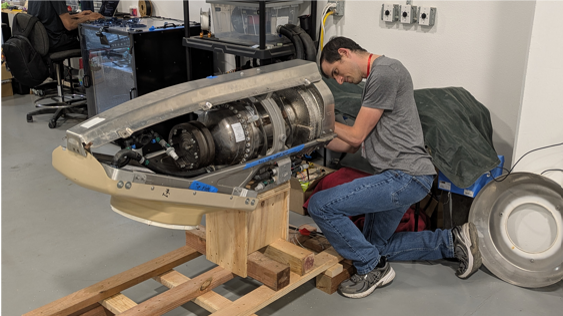
COSMIAC supports advanced space power prototyping and energy-system research, including power conversion, compact reactor component studies, space-relevant thermal and vibration environments, radiation-resilient materials, and high-power mission-enabling technologies.

  • Advanced power conversion and high-power mission studies
  • Space-relevant thermal, vibration, and radiation considerations
  • Materials and component studies for compact power systems
  • Energy storage, fuel cell, and electrochemical system support
Autonomous systems C-UAS and field robotics
Autonomy and Field Systems

Autonomous Systems, C-UAS, and Field Robotics

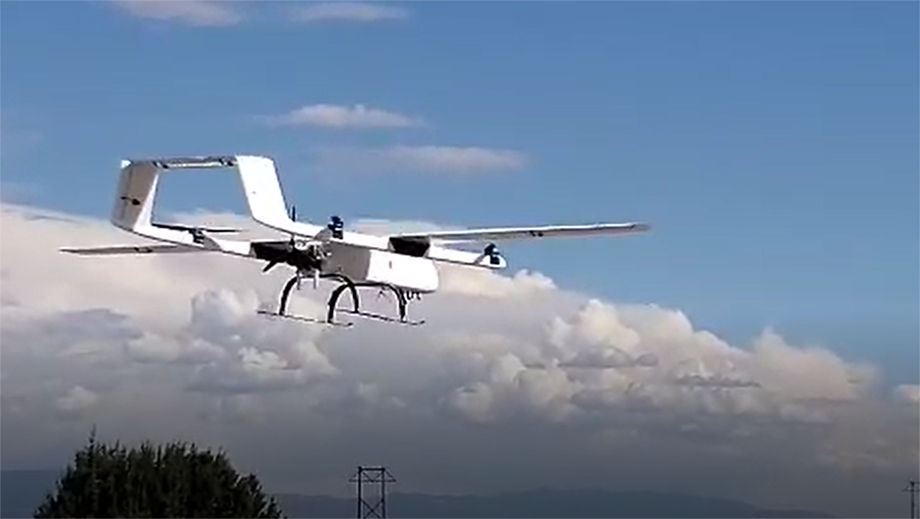
COSMIAC supports autonomous systems, C-UAS concepts, field robotics, sensing, communications, and deployable hardware/software prototypes for aerospace, defense, and operational test environments.

  • C-UAS concepts and unmanned systems evaluation
  • Drone, robotic, and field system integration
  • GPS-denied and contested-environment concepts
  • Machine learning, sensing, communications, and field-test support

How these capabilities support COSMIAC programs

Cross-cutting capabilities are most valuable when combined with mission-specific thrust areas and sponsor-driven engineering objectives.

Prototype and test support

Advanced power and autonomous systems work often requires rapid hardware development, benchtop testing, field preparation, materials evaluation, and environmental test planning.

Mission modeling and analysis

Power, autonomy, field systems, and C-UAS concepts can be evaluated through modeling, simulation, operational scenario development, and mission analytics before field deployment.

Secure and resilient operations

Autonomous systems and power-enabled missions depend on secure communications, resilient networks, embedded systems, contested-environment planning, and trusted data movement.

Materials and environment considerations

Space power and fielded hardware both require attention to thermal behavior, vibration, radiation, mechanical robustness, environmental exposure, and long-duration reliability.

Student workforce development

These areas provide hands-on training opportunities in robotics, power systems, embedded software, signal processing, field test, fabrication, and systems engineering.

Partner-driven flexibility

COSMIAC can scale these capabilities into feasibility studies, proposal support, prototype builds, test planning, student projects, or larger applied research programs.

Need a capability that crosses technical boundaries?

Engage COSMIAC to combine advanced power, autonomy, field robotics, secure networks, modeling and simulation, rapid prototyping, and student-supported engineering into a focused project plan.

Contact COSMIAC